Why ‘Clean Girl Makeup’ Is Evolving Into ‘Soft Blur Makeup’ in 2027
Velvet skin, half-finished blush, a quiet rebellion against the algorithm. A beauty journalist on the trend rewriting how we wear our faces.
A few years ago, I sat in a tiny espresso bar in Copenhagen watching a girl reapply a cushion compact in the window light. She wasn’t fixing anything. She was, I realized later, performing the very specific 2023 ritual of looking like she hadn’t tried — a slicked bun, glazed cheekbones, lips bitten into a stain. Clean Girl Makeup, that thing we all pretended we invented. Four years on, I think about her often, because the girl I’d photograph today doesn’t look anything like her. She looks softer. Smudgier. A little undone in a way that feels almost relieved.
That shift has a name now. We’re calling it Soft Blur Makeup, and it’s quietly rewriting what beauty in 2027 is supposed to feel like.
From Glass Skin to Velvet Skin
Here’s the thing: every beauty era is a reaction to the one before it. The 2010s contour years gave us the cheekbones of small fictional countries. Then came glass skin — that mirror-finish K-beauty moment where we all bought essences and prayed. Clean Girl Makeup softened the edges of glass: less reflective, more dewy, but still chasing a kind of HD perfection that read beautifully through a front-facing camera at noon.
Velvet skin — the texture obsession driving Soft Blur Makeup — is the opposite impulse. It’s matte but warm. Diffused but alive. Imagine the difference between a polished marble countertop and a peach left on a sunny windowsill for an hour. Both are luxurious. Only one of them looks like it could be touched.
Perfection Fatigue Is Real
Let’s be honest. We are tired. Not in a cute, I-need-a-bath way — in a deeper, cultural exhale. Five years of filters that smooth your pores into oblivion. Five years of “no-makeup makeup” that secretly required eleven products and a ring light. Five years of comments sections diagnosing other people’s chins. Somewhere along the way, the pursuit of looking effortlessly flawless became its own full-time job, and a lot of us just… clocked out.
What surprised me most reporting this piece was how many women in their twenties said the same sentence almost verbatim: “I don’t want my face to look fixed anymore.” Not undone. Not raw. Just not fixed. There’s a difference, and Soft Blur Makeup is the visual language for it.
The new flex isn't flawless skin. It's a face that looks like it has a story.
What Soft Blur Makeup Actually Looks Like
If you’re picturing it: think of a portrait shot just slightly out of focus on purpose. Skin reads even, but you can still see freckles diffusing through. Cream blush isn’t blended into oblivion — it’s pressed on with fingers and left a little uneven, like a watercolor wash. Lips are stained from the inside, the way they look after a glass of red. Brows are brushed up and left alone. There’s almost no powder. Almost no edges. Just warmth, settling.
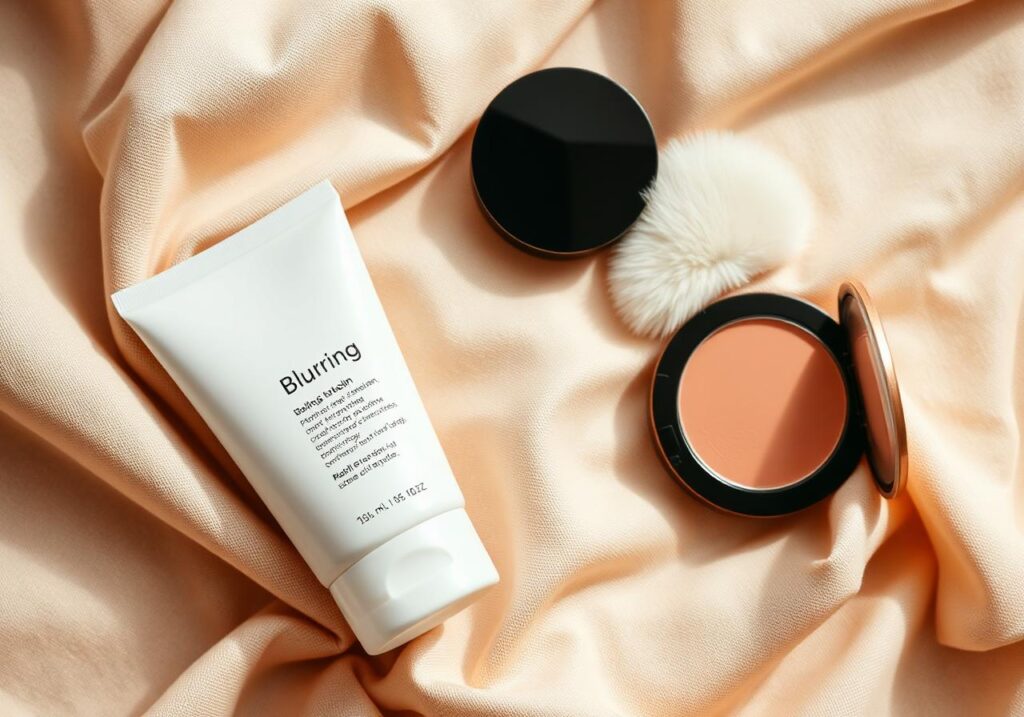
The products driving it are tellingly soft, too. Blurring balms instead of mattifying primers. Skin tints that read as second-skin rather than coverage. Cream bronzers in shades named after times of day. The makeup artist Daniel Sallstrom told me, only half joking, that he hasn’t opened a beauty blender in eight months. “Fingers,” he said. “Always fingers. The brush left the chat.”
TikTok Didn't Invent This. But It Named It.
A few months ago, the hashtag #softblurmakeup started climbing past the billion-view mark, and like every TikTok beauty trend before it, the think-pieces arrived three weeks late. But this one is different in a way I want to underline: it didn’t start with a tutorial. It started with people stitching old film stills — Sofia Coppola’s Marie Antoinette, early Wong Kar-wai, 1990s Kate Moss in her hotel-room phase — and saying, gently, this. More of this. Less of the other.
That’s a meaningful tell. Gen Z beauty trends, the ones that stick, almost always arrive with a mood board before they arrive with a product. TikTok beauty trends in 2027 are no longer about teaching you a technique. They’re about giving you permission to want a different texture of life.
The Skin-First Quiet Revolution
Soft Blur Makeup wouldn’t be possible without the slow, expensive, occasionally insufferable rise of skin-first beauty. We have spent the better part of a decade learning the names of ceramides. We’ve added barriers, removed actives, forgiven our pores. The result is a generation of skin that’s genuinely calmer — and that needs less from foundation than any face in beauty history.
The downstream effect is what’s interesting. When skin behaves, makeup gets to be jewelry instead of armor. You don’t need a full-coverage base if your barrier is intact and your sleep is, you know, a thing that happens. That’s why Soft Blur Makeup feels luxurious without looking expensive. The luxury is underneath.
A note on luxury beauty in 2027
I was at a Hermès Beauty preview last spring and overheard two editors arguing — politely, in that very European way — about whether velvet was a finish or an attitude. They were both right. The luxury houses have moved almost entirely away from heavy-coverage, high-gloss formulas. Chanel’s most talked-about launch this year is a cream blush that disappears into skin like a rumor. La Mer relaunched its compact powder in a texture they’re literally marketing as “blur.” When luxury picks up a vibe, you know the cycle is real.
Authenticity Without the Performance of It
A few years ago, “authenticity” in beauty meant filming your acne in 4K and getting brand deals out of it. There was something brave and a little exhausting about it — a feeling that to be real online, you had to first prove it. Soft Blur Makeup is what authenticity looks like once it stops needing an audience. It isn’t anti-makeup. It isn’t no-makeup. It’s makeup that doesn’t ask to be discussed.
That’s the part I find most moving, honestly. The girls I interviewed for this piece — students, junior bankers, a tattoo artist in Lisbon, my own twenty-two-year-old cousin — were not making a statement. They had simply stopped performing one. Skin positivity, in 2027, looks less like a hashtag and more like indifference to whether anyone notices your pores.
How People Are Actually Wearing It
Three quick scenes from the last month, because trends don’t live in slide decks, they live in the wild.
Scene one. A wedding in the Cotswolds. The bride wore a blurred peach cheek, a my-lips-but-warmer stain, and not a single product that promised twelve-hour wear. She looked, every photograph confirms, like a painting.
Scene two. Paris Fashion Week, front row. The street-style girls who used to arrive in full glam were swapping notes on the same Korean cushion that gives a velvet, slightly diffused finish. The bronzer was creamy. The eyeliner, where it existed at all, was smudged with a fingertip on the way out the door.
Scene three. A Sephora in Brooklyn on a Saturday. I watched three different shoppers reach for blurring balms before they reached for foundation. Consumer behavior is shifting faster than the launch calendars can keep up. According to NielsenIQ data shared with the industry late last year, U.S. sales of “skin tint” and “balm” SKUs grew double digits while traditional full-coverage foundation declined for the third year running. The receipts, as they say, are receipting.
Will It Last? Or Is This Just the Next Pendulum?
I have been doing this long enough to know better than to promise any trend forever. Beauty, like fashion, breathes in and out. There will absolutely be a counter-swing eventually — probably something graphic and architectural, born of whatever cultural mood we’re in by 2029. But Soft Blur Makeup feels less like a look and more like a release valve. And those tend to stick around in some form, even when the surface evolves.
What I’d bet on: the velvet finish, the blurred edges, the skin-as-the-event philosophy — those are not going anywhere fast. The vocabulary may change. The products certainly will. But the underlying permission, the one that says your face is allowed to look like a face, is the kind of cultural shift you don’t really walk back.
Frequently asked
The questions everyone's whispering
Soft Blur Makeup is a 2027 beauty trend defined by velvet skin, diffused cream blush, stained lips and almost no powder. It evolved from Clean Girl Makeup and prioritizes a softly out-of-focus, lived-in finish over high-definition perfection
Clean Girl Makeup leaned dewy and polished, optimized for the front-facing camera. Soft Blur Makeup is matte-leaning and velvety, embraces skin texture, and feels intentionally undone rather than effortlessly perfect
A blurring balm or skin tint, a cream blush, a cream bronzer in a warm shade, a tinted lip balm or stain, and a clear brow gel. Apply with fingertips for the most natural, diffused finish
Perfection fatigue. After years of filtered, flawless looks, beauty enthusiasts aged 18–40 are gravitating toward authentic beauty trends that read as warm, human and quietly luxurious instead of high-maintenance
Yes. Because it skips heavy powder and full coverage, the velvet-skin finish often looks more flattering on mature and textured skin than highly reflective or matte-flat formulas
THE TAKEWAY
Maybe the most beautiful thing you can do in 2027 isn't to perfect your face — it's to soften your grip on it.
Wear the blurred blush. Skip the powder. Let the freckles through. The era of finished faces is closing. What’s arriving is warmer, quieter, and a great deal more like you.