
—Beauty Tech
AI skincare devices that are trending on Google
A beauty journalist’s honest, slightly obsessed deep-dive into the smart skincare tools blowing up TikTok, Reddit, and your search history.
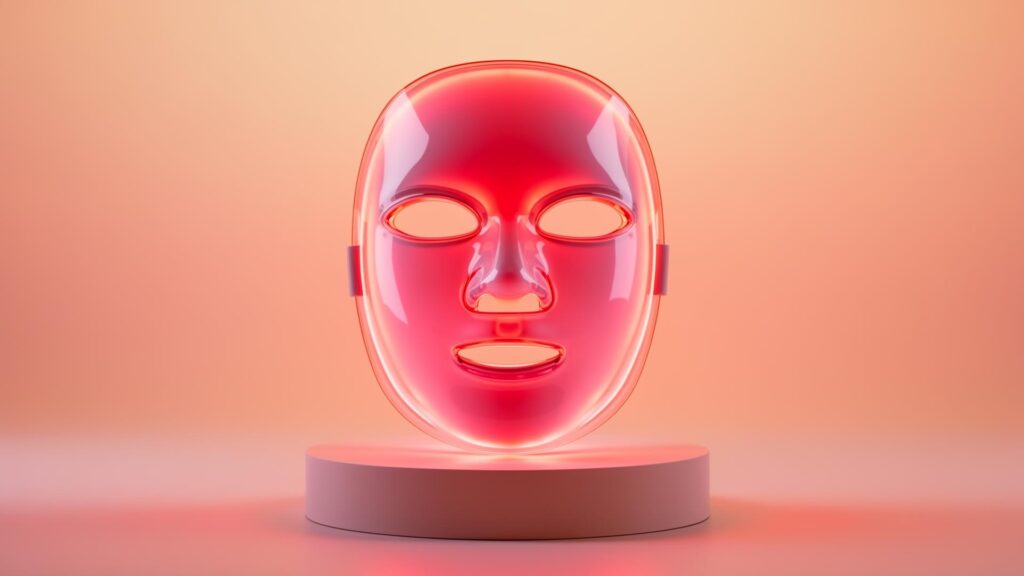
I bought an LED face mask at 1:47am after my third TikTok in a row told me it would change my life. Reader, it didn’t change my life. But it did make me very curious about why everyone — and I mean everyone — is suddenly talking about AI skincare devices.
So I went looking. I read forums, scrolled through dermatologist reviews, tested four devices, and quietly maxed out my “skincare experiments” budget for the quarter. Here’s what’s actually trending, what’s worth your money, and what’s just a very expensive glow stick.
THE TREND
So, what's actually going on with AI skincare?
Here’s the thing — skincare used to be guesswork. You’d stand in a Sephora aisle, squint at a label, and pray the salesperson wasn’t just pushing whatever had the highest margin that week. Now? Your phone can read your pores.Your bathroom mirror can reveal dehydration before your morning coffee is even ready.It’s wild, and honestly, kind of addictive.
AI skincare devices are smart tools — handheld, wearable, or app-based — that use computer vision, sensors, and machine learning to analyze your skin and recommend (or actively deliver) treatments.Think of them as a mix of dermatology, beauty-tech innovation, and those slightly chaotic 2 a.m. Google deep dives.
Searches for “AI skin analysis” have quietly exploded. Reddit’s r/SkincareAddiction is full of threads dissecting whether the new LED face masks are worth the price of a flight to Lisbon. TikTok has turned device demos into a whole genre. And I, a person who once swore she’d never buy a “gadget” for her face, now own three.
THE LINEUP
The AI skincare devices everyone's actually Googling
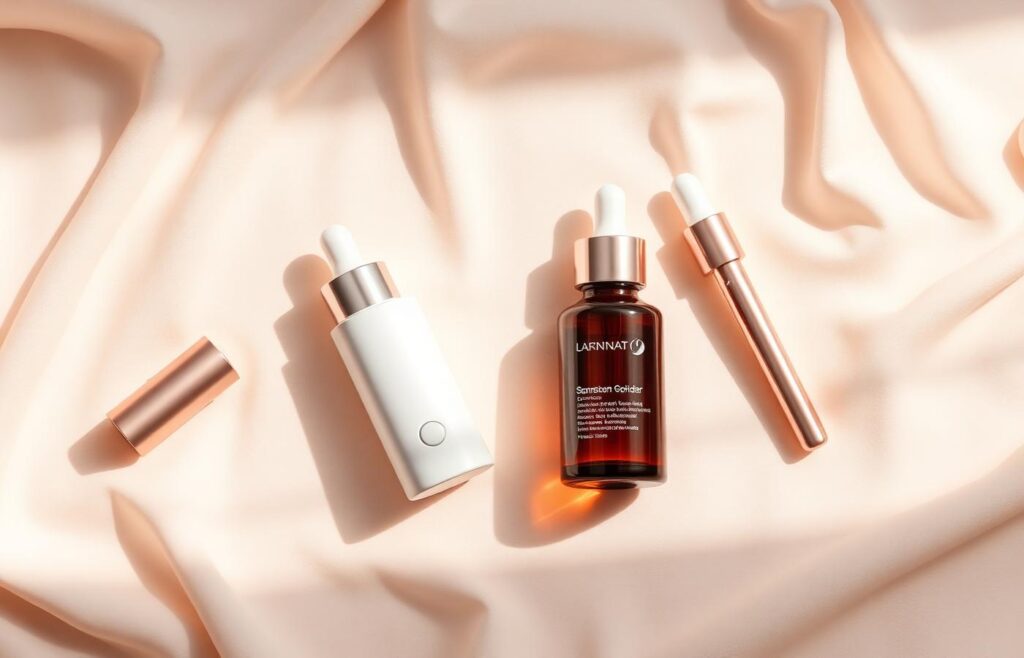
I went down the rabbit hole so you don’t have to. These are the ones that keep popping up — in trend reports, in group chats, in those eerily accurate ads that make you feel personally targeted.
01
LED Face Masks
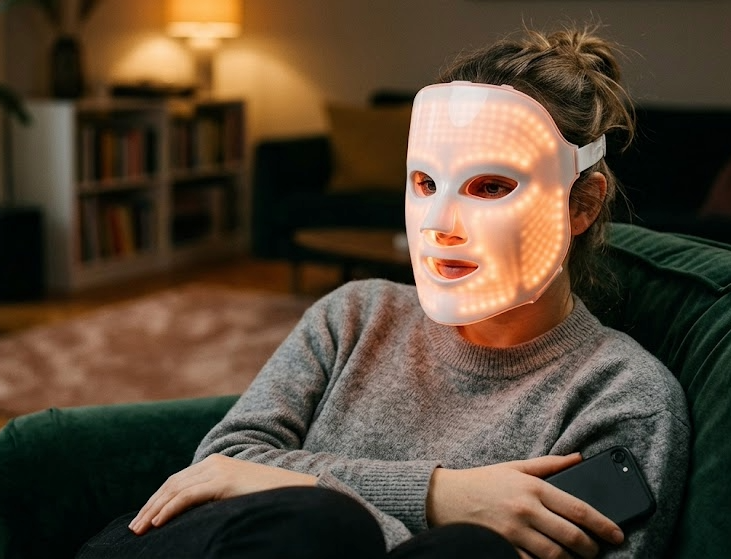
If you’ve opened TikTok in the past year, you’ve seen one. Glowing red, blue, sometimes a freaky purple. Brands like Omnilux, CurrentBody, and Dr. Dennis Gross have made LED face masks the gateway drug of AI beauty tech. The newer ones pair with apps that track usage, remind you when to recharge, and personalize session length based on your skin goals. Red light for collagen, blue for breakouts. It’s not magic, but it’s the closest thing I’ve felt to it.
02
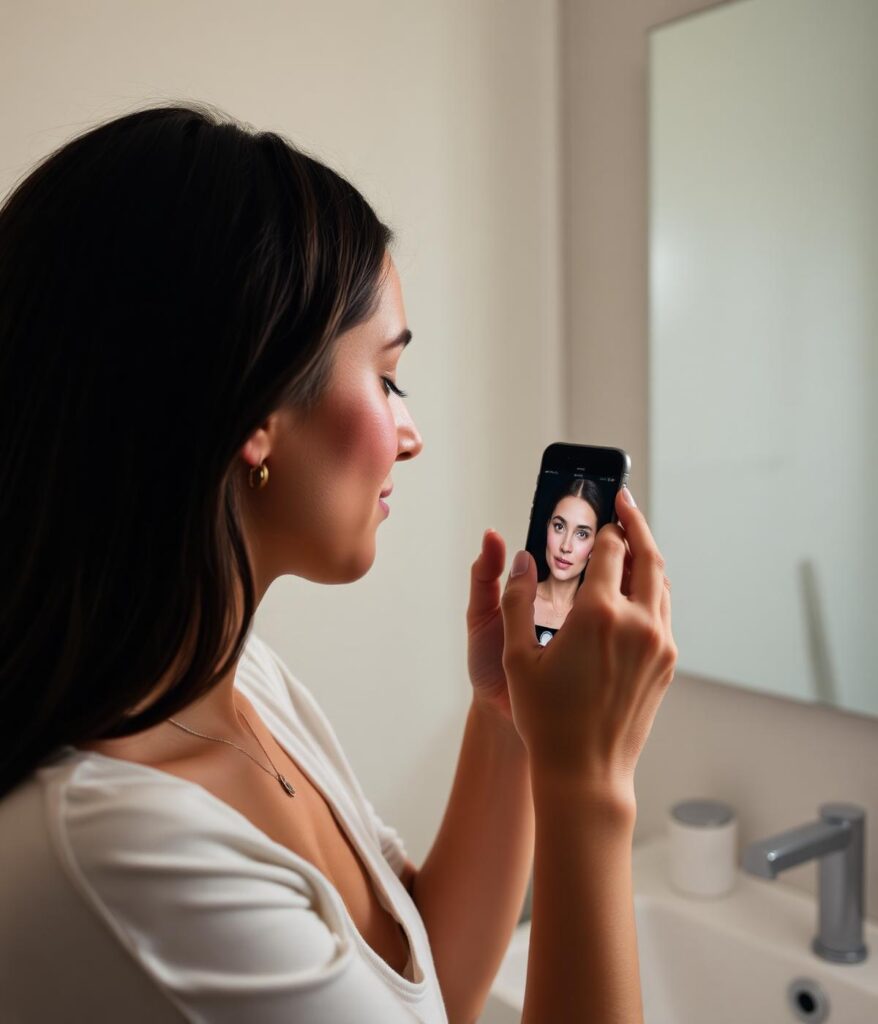
AI Skin Analysis Apps
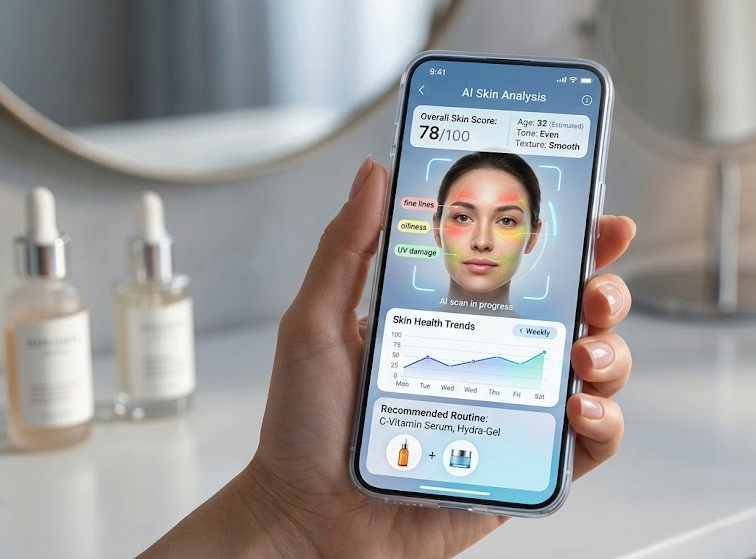
Apps like HiMirror, Perfect Corp’s YouCam, and L’Oréal’s Skin Genius scan your face and serve up a dermatology-lite report. Hydration. Texture. Dark spots. Even predicted aging. The first time I used one, I laughed, then panicked, then bought a vitamin C serum within 11 minutes. That’s the funnel, baby.
03
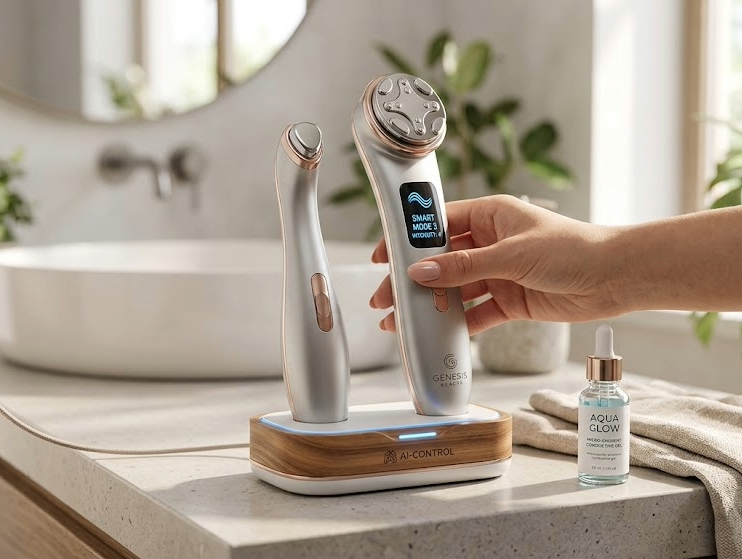
Smart Micro-current Wands
The NuFace Trinity+ and FOREO Bear Pro now come with sensors that adjust intensity based on your skin’s conductivity in real time. Translation: you stop guessing if you’re using it right. It just… knows. The app gamifies the routine, which is a little embarrassing and also extremely effective at making me actually do it.
04
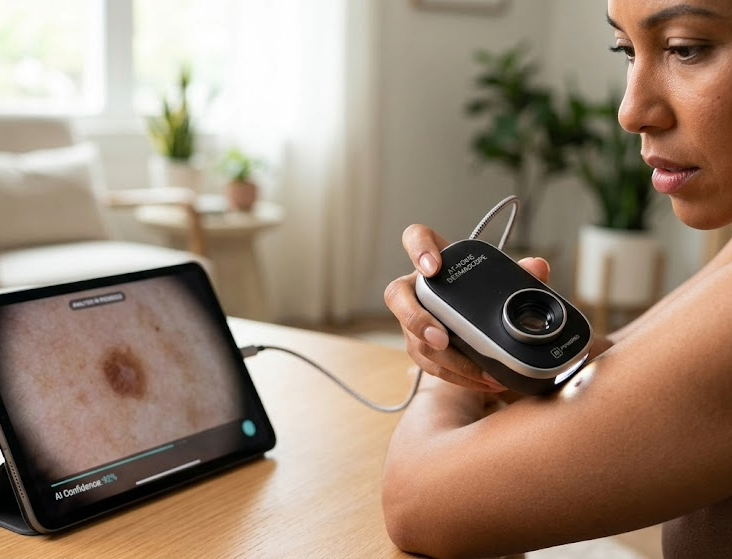
At-Home AI Dermascopes
Devices like the Neutrogena SkinScanner (RIP, but its descendants live on) and newer entrants from K-beauty brands let you take ultra-zoomed images of your skin and track changes over weeks. It’s part skincare tool, part diary. It’s also slightly humbling.
05
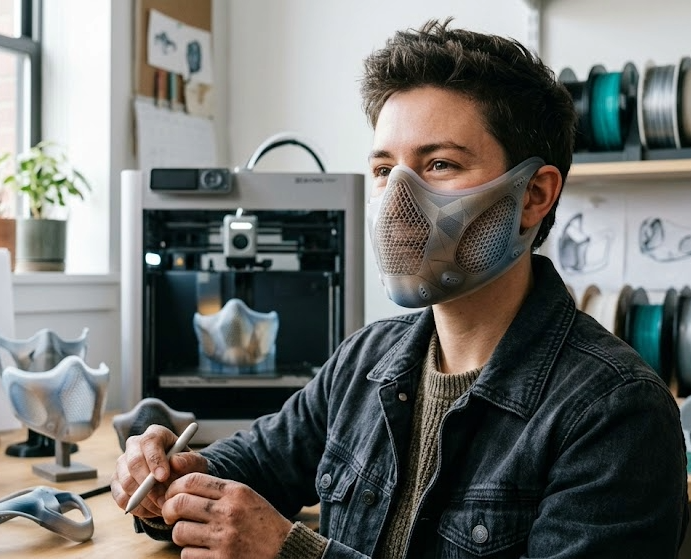
3D-Printed Personalized Masks
Neutrogena MaskiD and Amorepacific’s IOPE Lab scan your face’s exact dimensions and print a sheet mask molded to you. Your jawline. Your weirdly asymmetrical eyebrows. All of it. Personalized skincare technology, taken literally.
The benefits people actually feel
Let’s be real for a second. A lot of beauty tech is, historically, beautiful trash. But the better AI skincare devices are doing something the industry has been terrible at for decades — giving you information that’s specifically about your face.
- Personalization that’s actually personal. Routines built from your data, not a magazine quiz.
- Consistency tracking. Apps nudge you. You start showing up for yourself.
- Visible progress. Side-by-side photos, not vibes.
- Less product waste. You stop buying serums for problems you don’t have.
- A little quiet ritual. Ten minutes of glowing red light is unexpectedly meditative.
Why we're emotionally hooked
Honestly? It’s not really about the wrinkles. It’s about being seen — even if it’s by an algorithm. There’s something disarming about a device that says, “Hey, your skin’s a little tired today, here’s what might help.” A boyfriend has never said that to me. A camera did.
For a lot of people I talked to, smart skincare tools became a small daily moment of attention in a life that doesn’t give them many. That’s not nothing. That’s kind of everything.
THE CATCH
The not-so-glowy side
I’d be lying if I said it was all dewy bliss. A few honest things to consider before you drop $600 on a face computer:
- Price. The good stuff isn’t cheap. Some devices cost more than a long weekend away.
- Data privacy. You’re literally uploading photos of your face. Read the policies. Then read them again.
- Inflated claims. “AI-powered” sometimes just means “has a battery.” Real AI beauty tech should explain how it analyzes you, not just say it does.
- It can’t replace a dermatologist. For moles, persistent acne, suspicious anything — see a human.
WHAT’S NEXT
Where this is all heading
The next wave of beauty tech trends is leaning hard into ambient sensing — bathroom mirrors with built-in skin scanning, wearable hydration patches, AI that adjusts your serum formulation in real time. There’s a startup working on a printer that mixes your moisturizer fresh every morning. I’m not making that up.
We’re moving from “skincare you buy” to “skincare that adapts to you, daily.” It’s a little sci-fi. It’s a little uncomfortable. It’s also, probably, where we’re going.
Quick answers, no fluff
Do AI skincare devices actually work?
What's the most popular AI skincare device right now?
Is AI skin analysis accurate?
Are AI skincare devices safe for sensitive skin?
How much should I spend on a smart skincare tool?
MY TAKE
Final, slightly biased thoughts
If you’d asked me two years ago whether I’d be enthusiastically reviewing a glowing face mask, I’d have laughed. But here we are. AI skincare devices, at their best, give you something rare — useful, specific, personal information about your own skin. At their worst, they’re an expensive placebo with good marketing.
Start small. An app costs nothing. An LED mask, if you’re going to commit, is the one most people don’t regret. Skip the fancy serums-with-Bluetooth until the tech proves itself.
And, look — if a little red light at the end of a hard day makes you feel held for ten minutes? That’s already worth something.